01
The dashboard
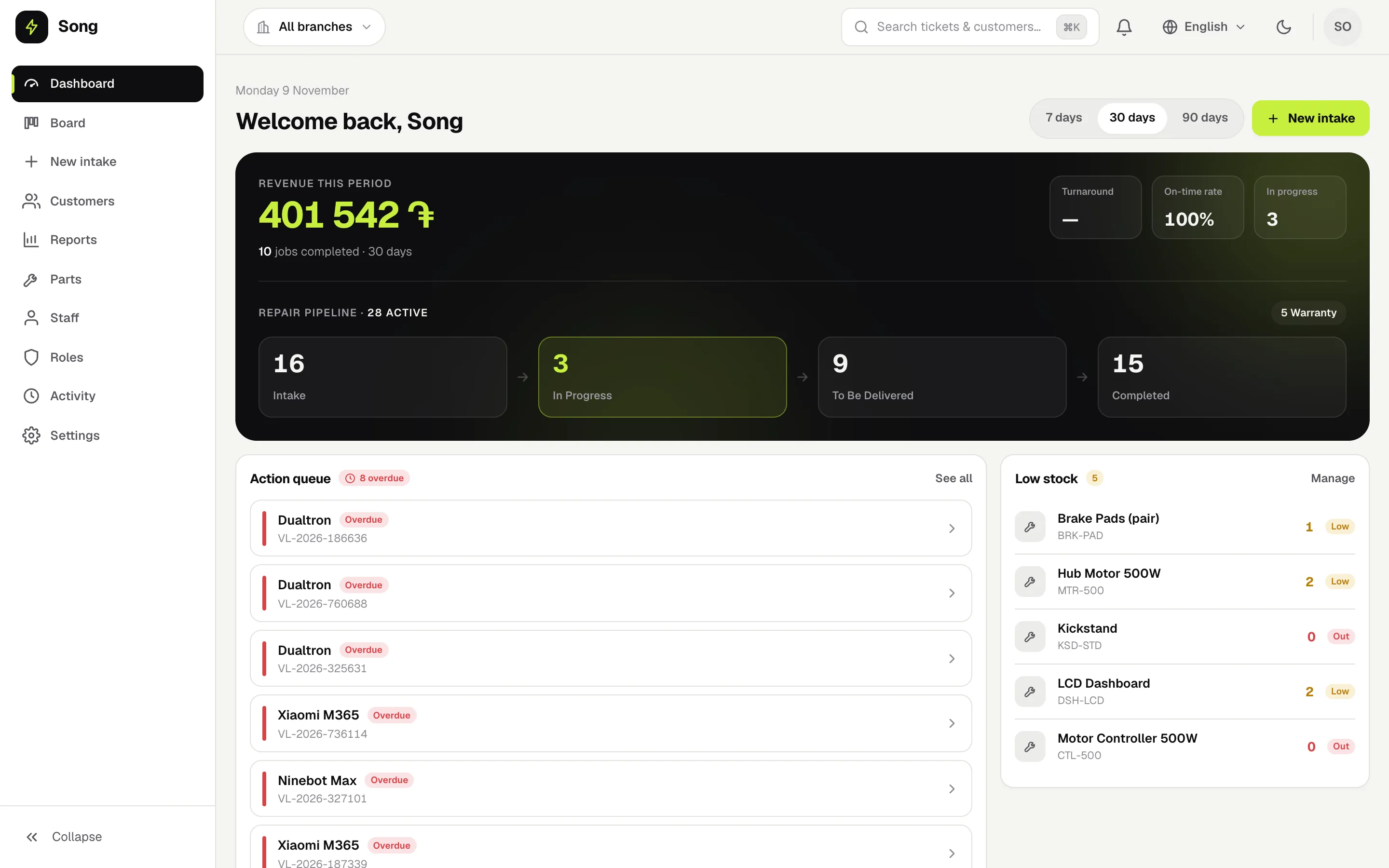
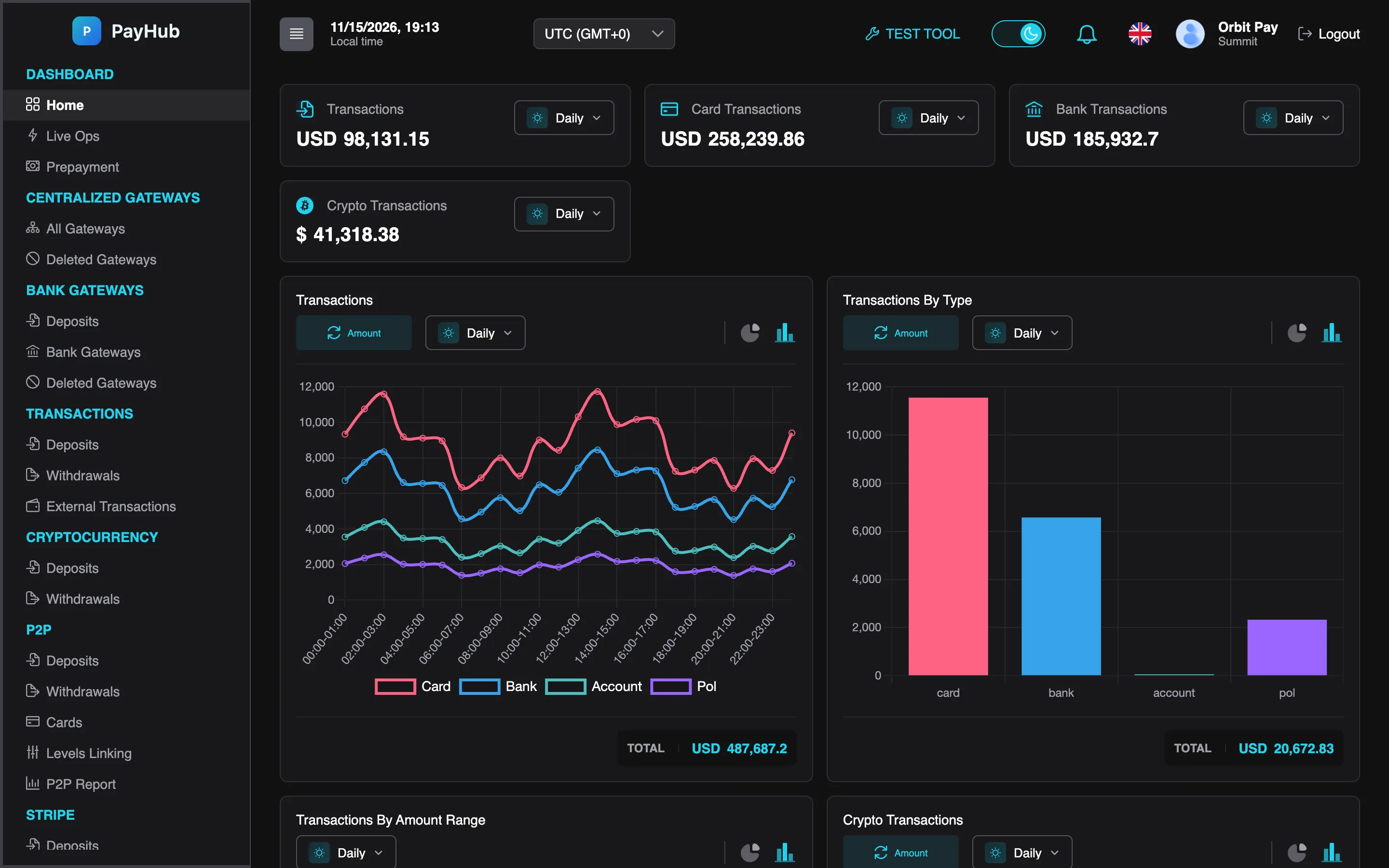
Money in by hour and by payment type, with totals per channel — for today, this week or any range.
A payment platform built from scratch for an iGaming operator: deposits and payouts through bank gateways, P2P card apps, crypto, Stripe, PayPal and Idram — with live monitoring, reports and roles down to every action. I led the front end.
An iGaming operator needed to take deposits and pay out winnings through dozens of channels — local bank gateways, P2P card apps, crypto and international cards. Each channel had its own panel, its own failures and its own reports, and support and finance were juggling tools instead of helping players.
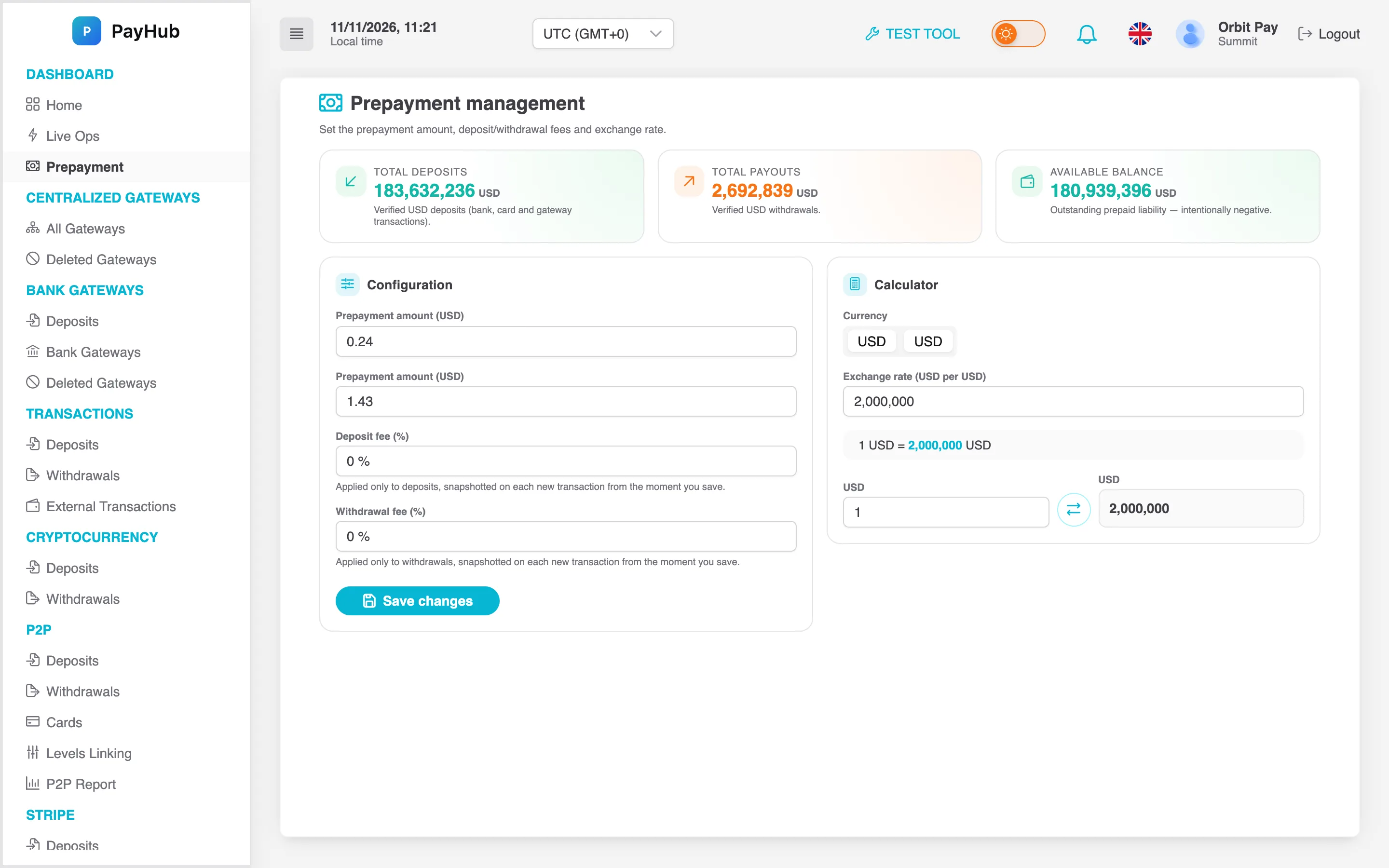
We built the platform from scratch — it started as two developers. It routes every deposit and payout, and one admin runs all of it. I led the front end, every screen of that admin: transactions of every type with filters and a timeline, Live Ops for real-time monitoring, gateways and user levels, withdrawals, the dashboard and reports, and roles and permissions down to each action. When a payment fails, the admin says why in plain words.
Money in by hour and by payment type, with totals per channel — for today, this week or any range.
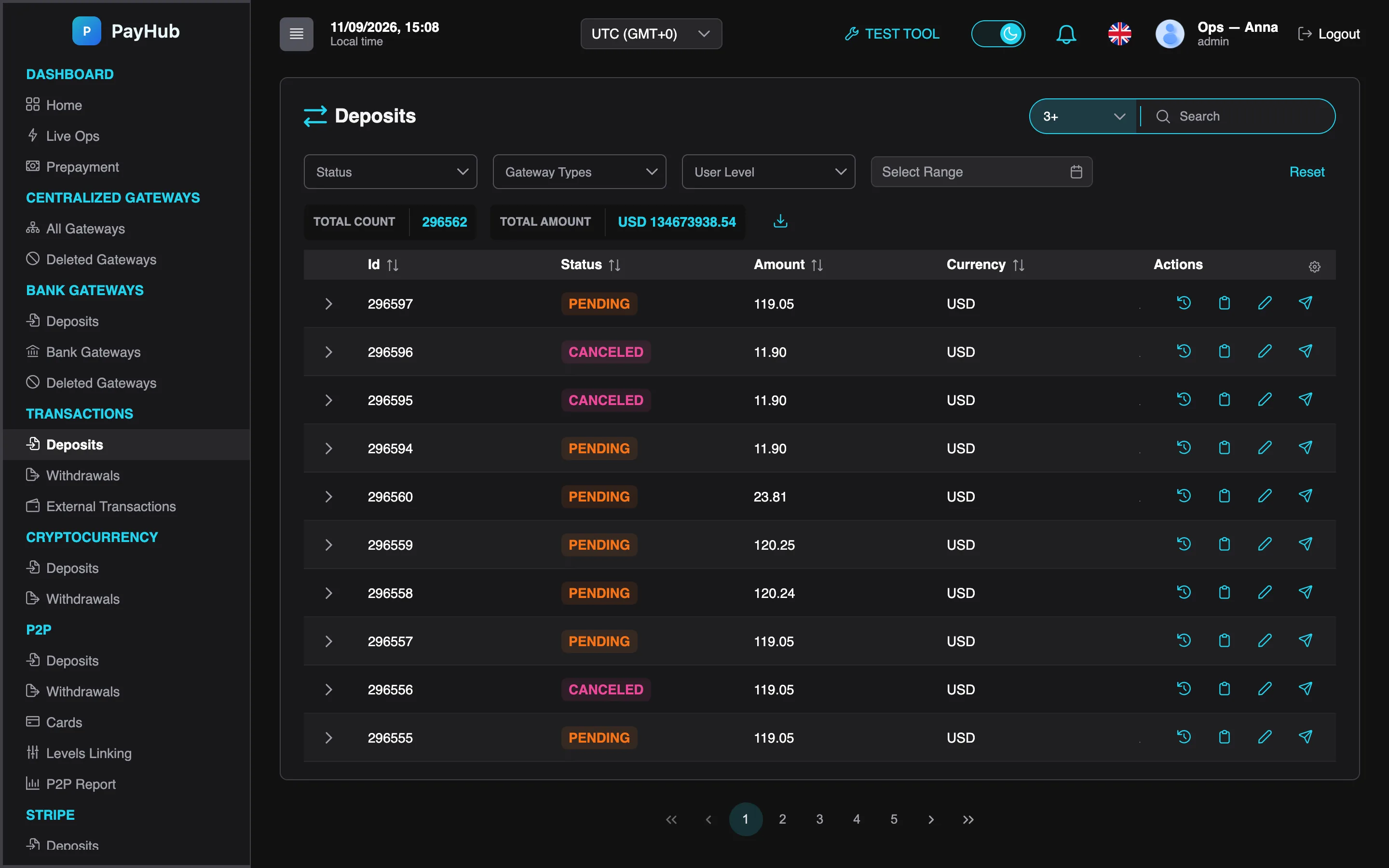
Status, amount and method at a glance, with the filters support actually uses.
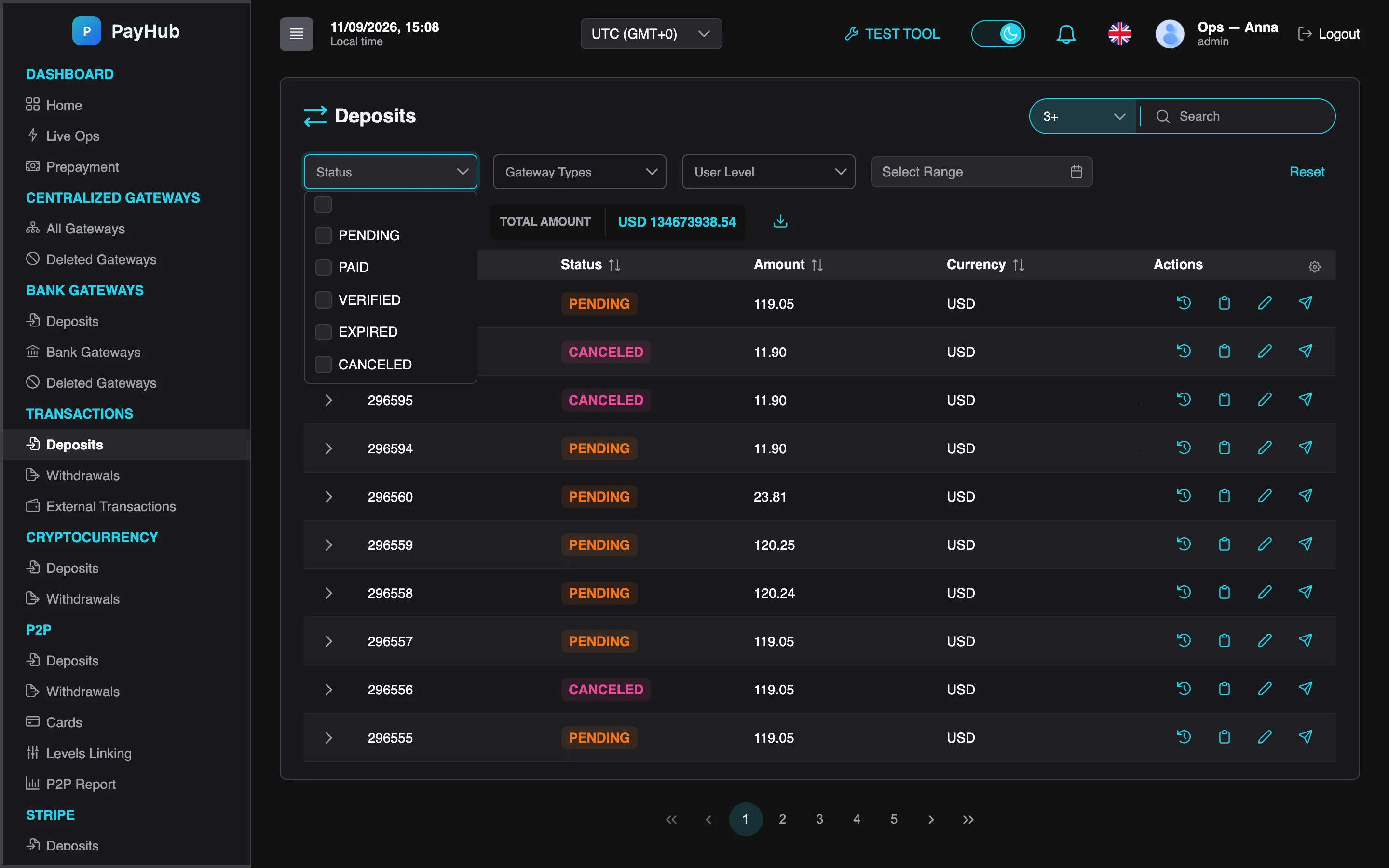
Two clicks narrow the list to cancelled or failed payments.
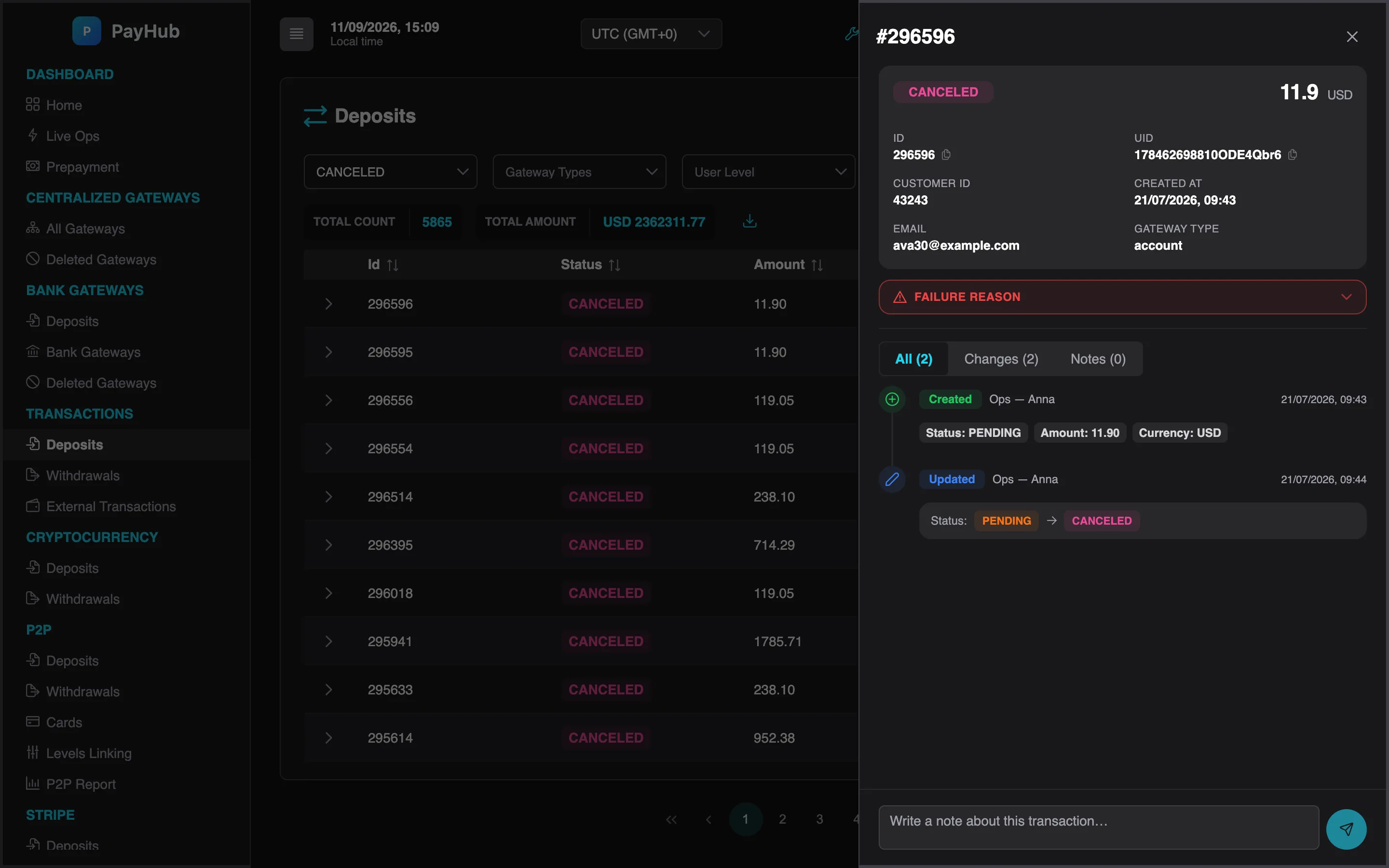
Every status change of a transaction on one timeline, in order, without leaving the list.
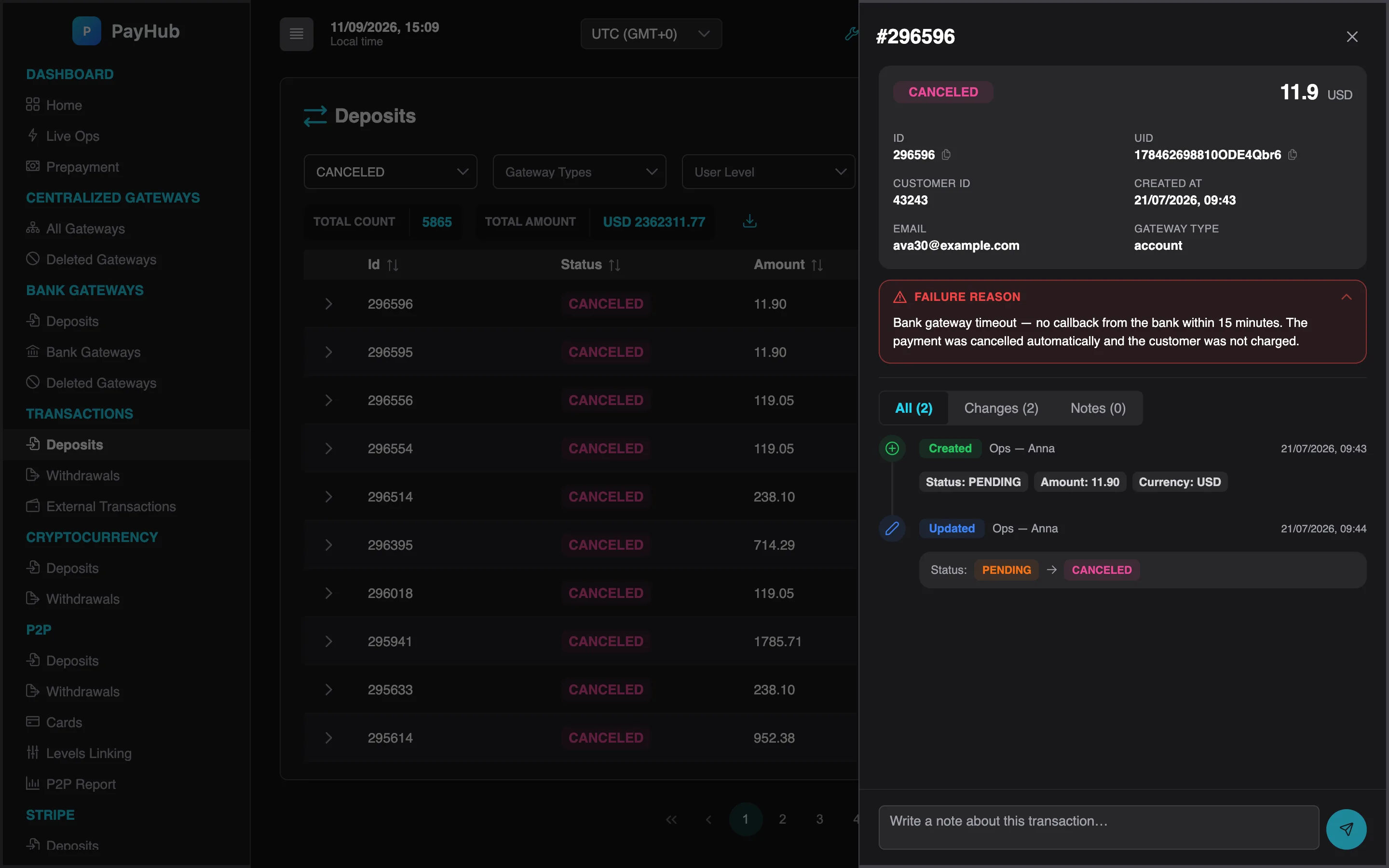
The provider's error code becomes a sentence support can read to a player, plus the next step.
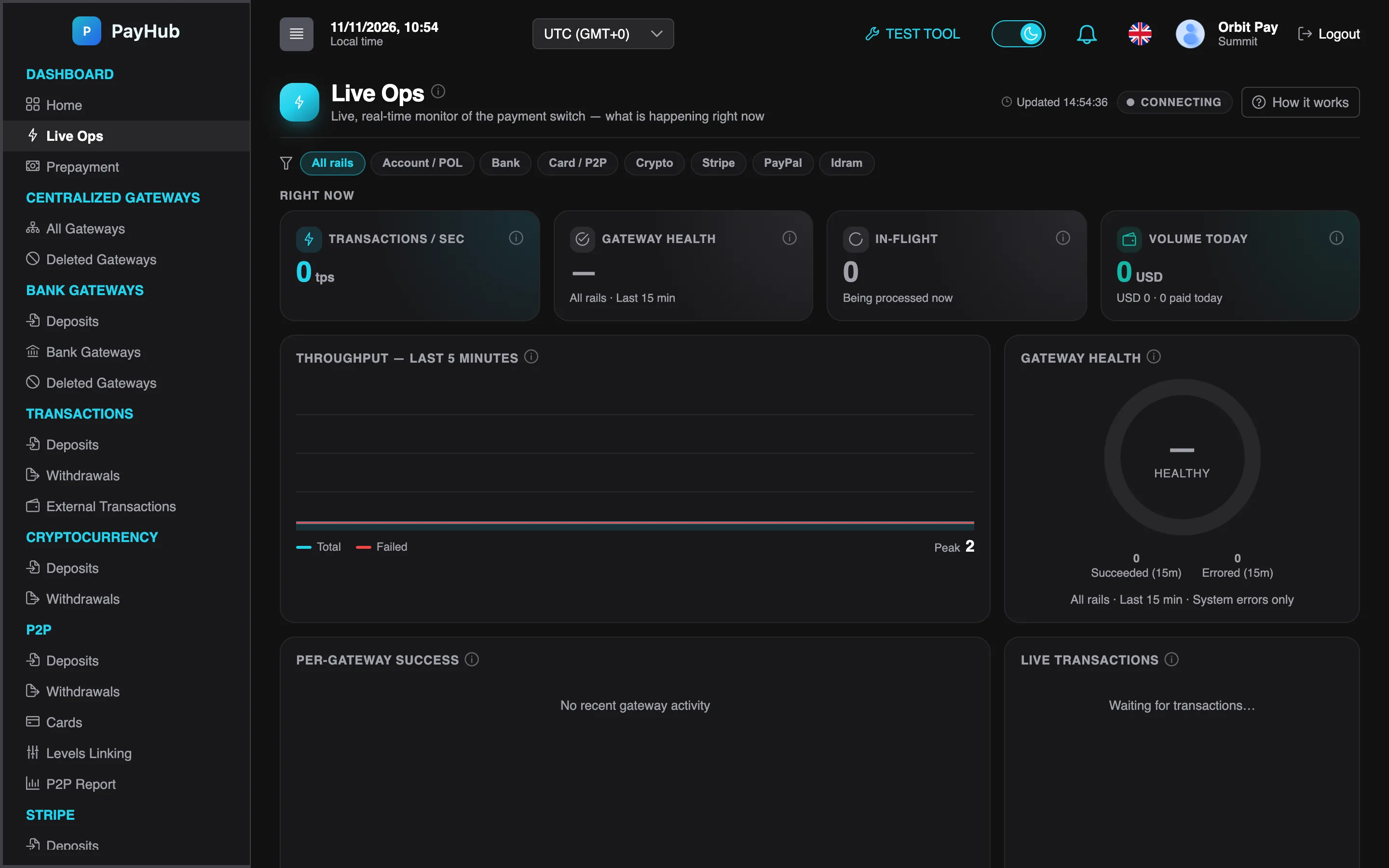
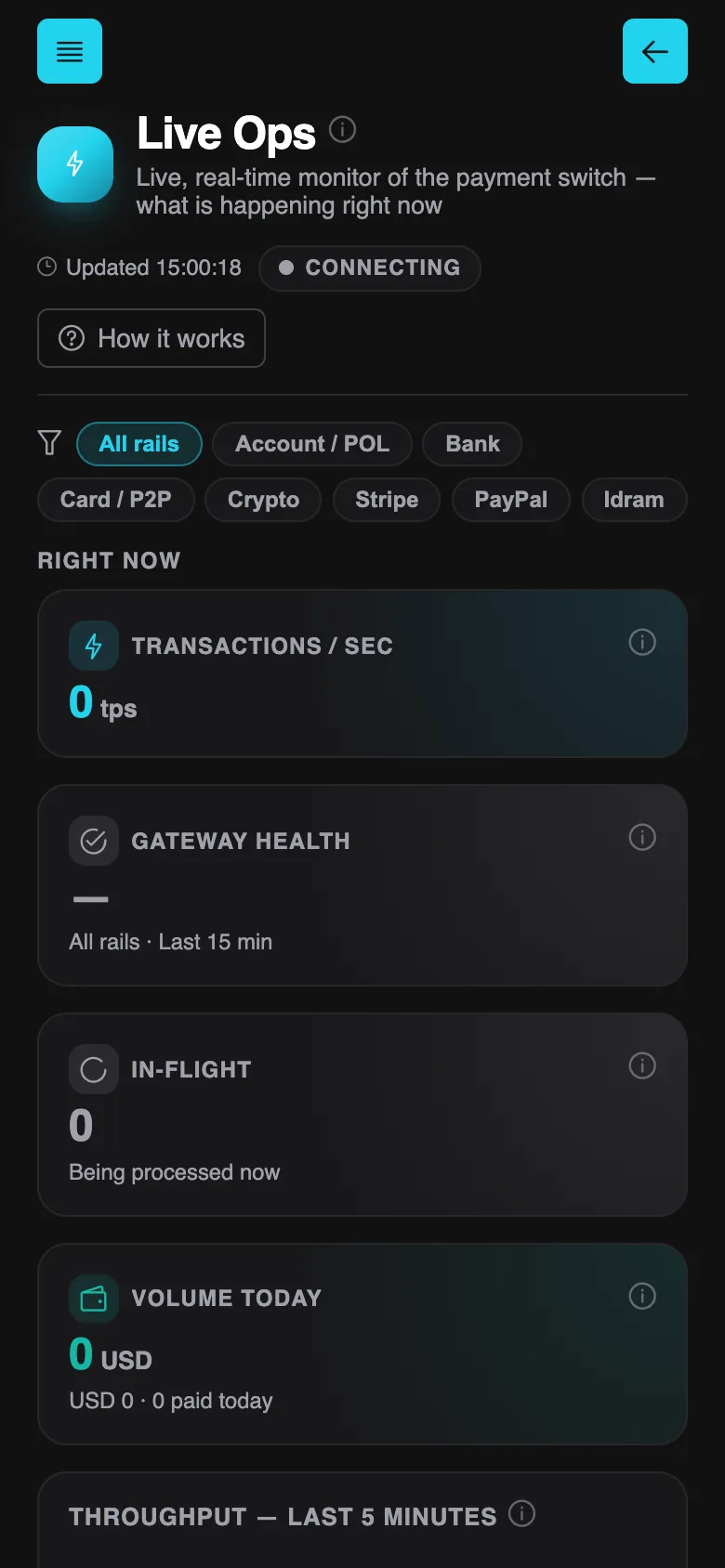
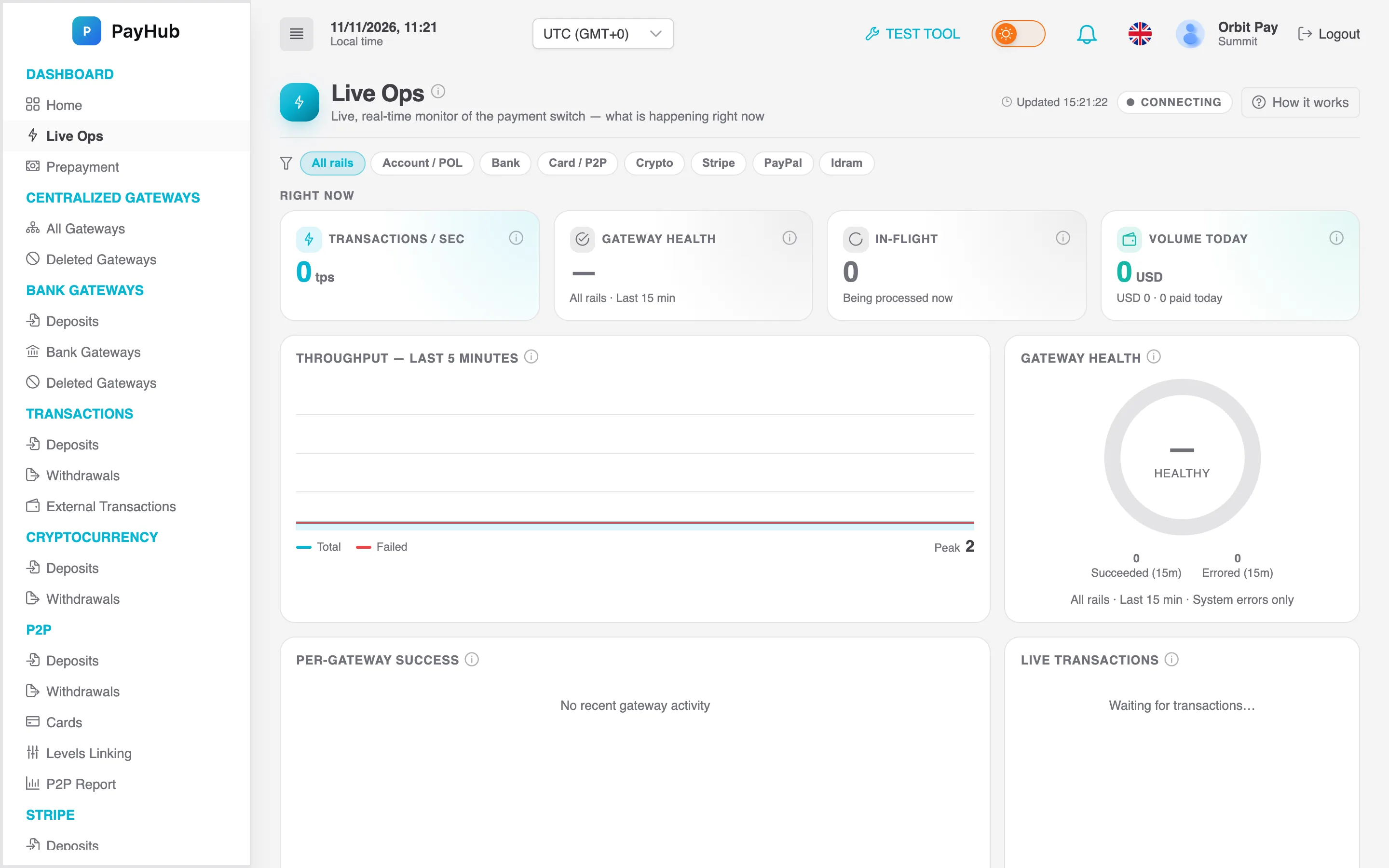
Transactions and gateway health as they happen, so a failing channel is caught in seconds.
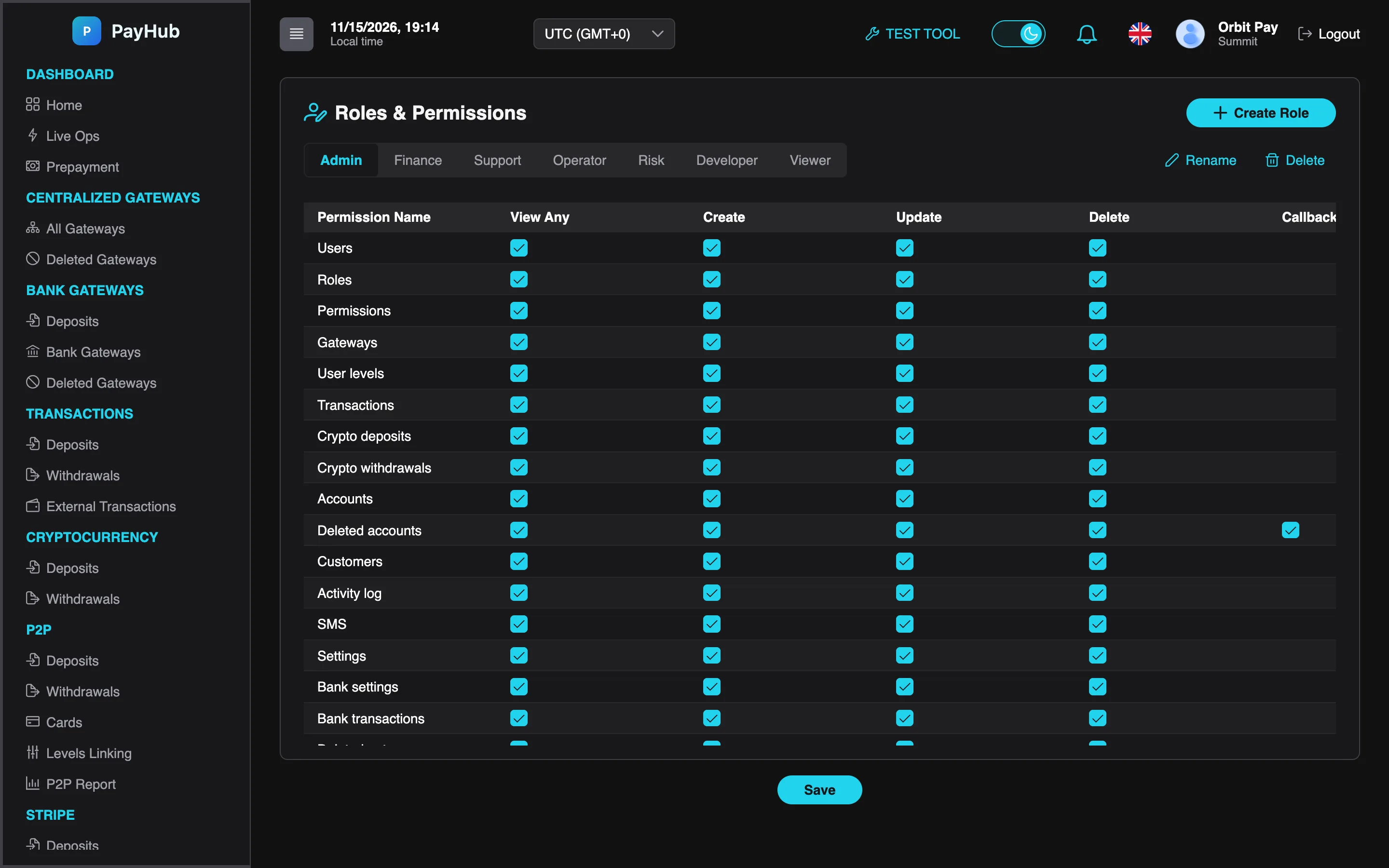
For every section: who can view, create, update and delete — and the admin shows each role only its part.
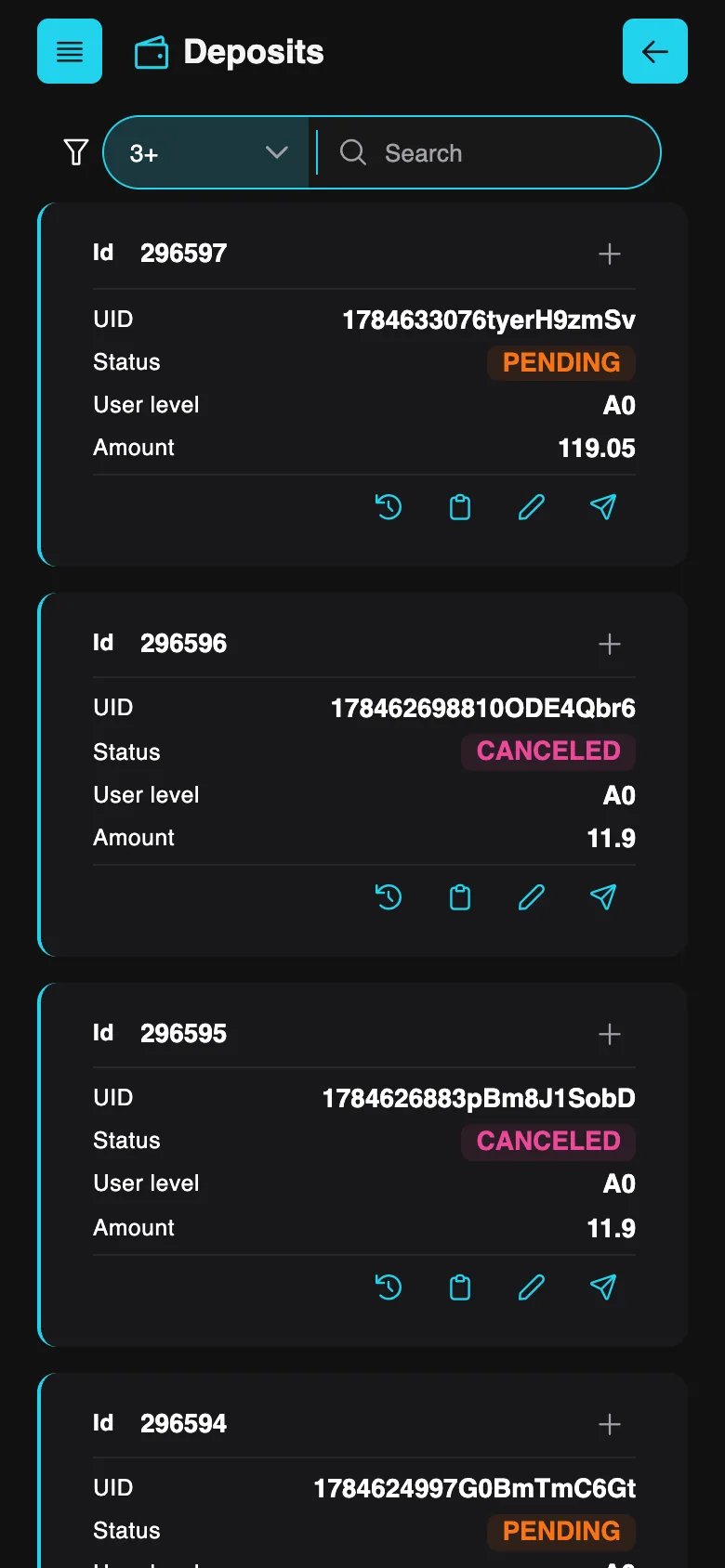
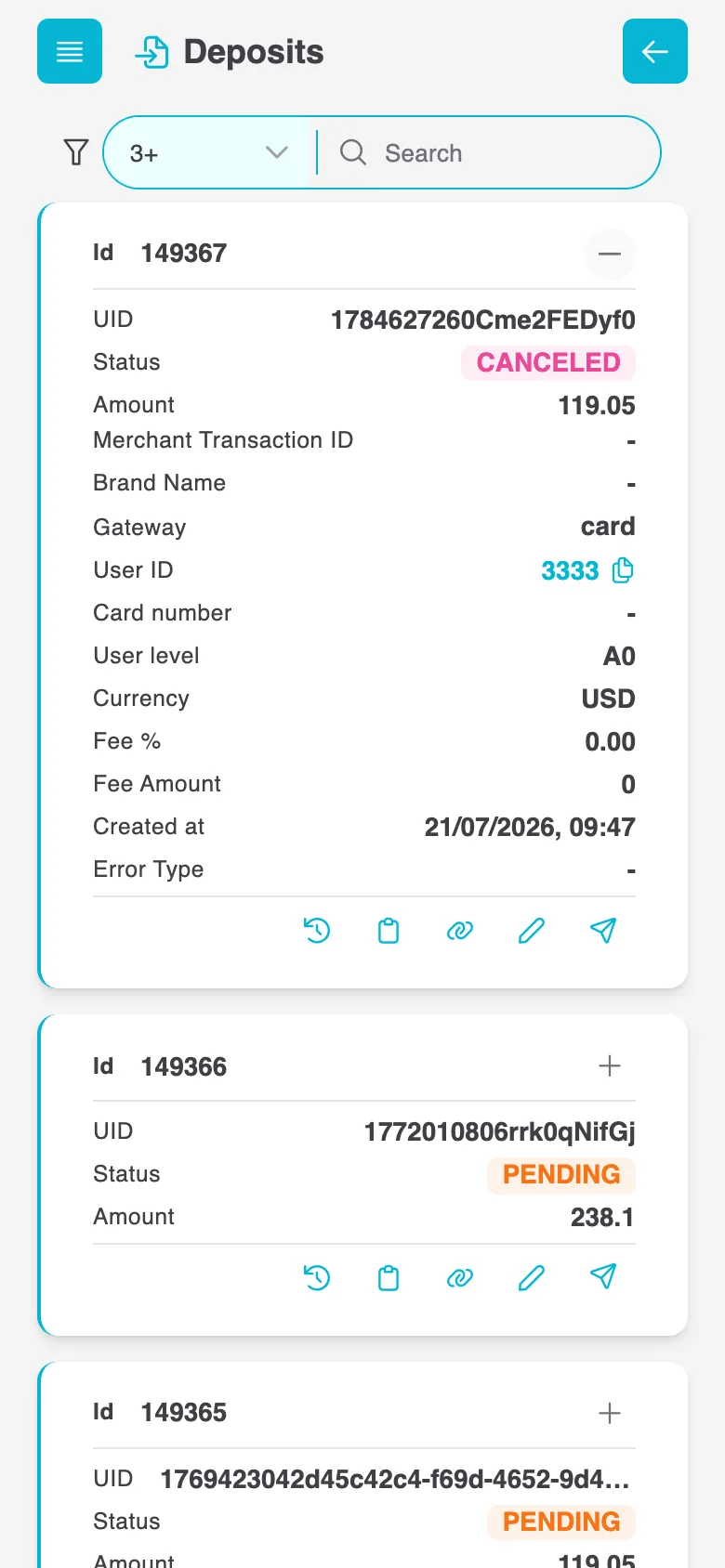
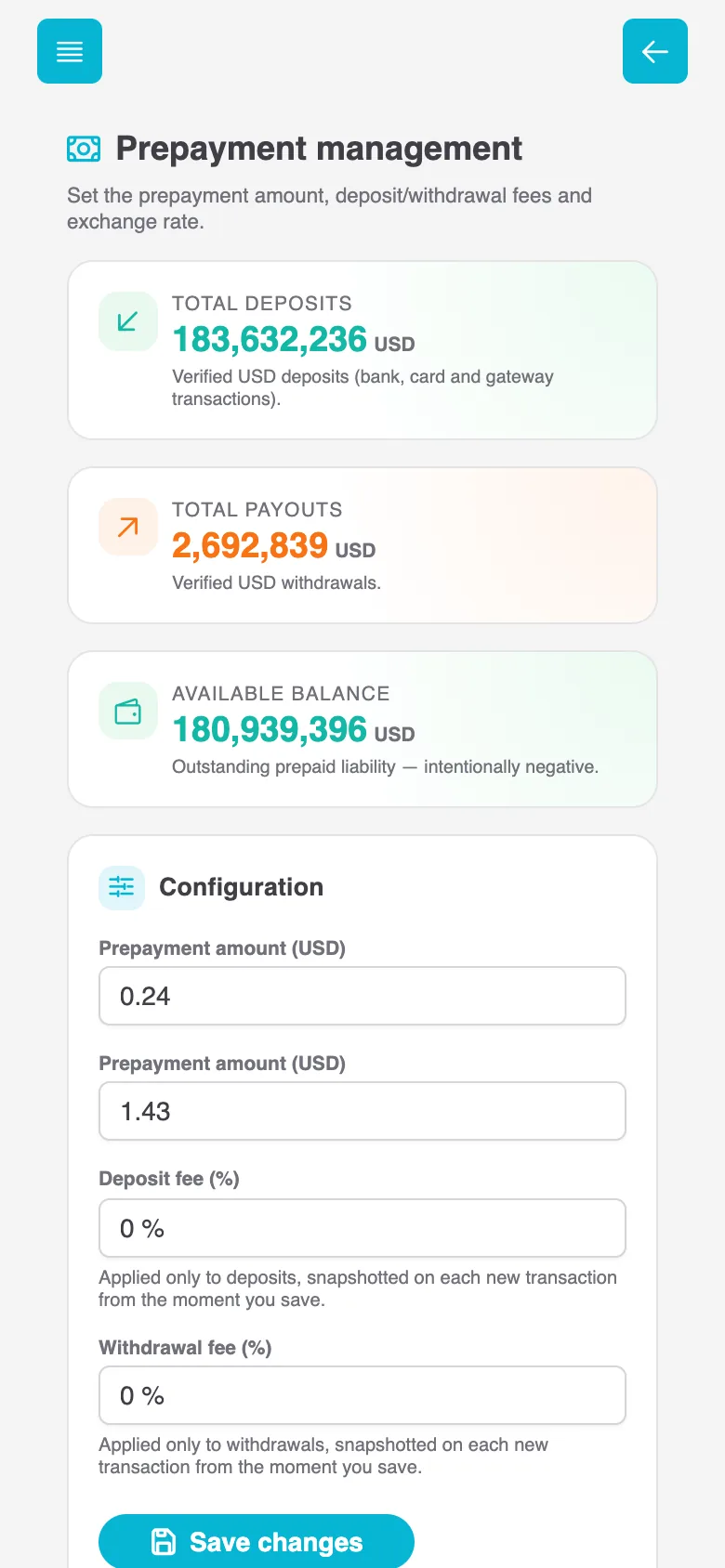
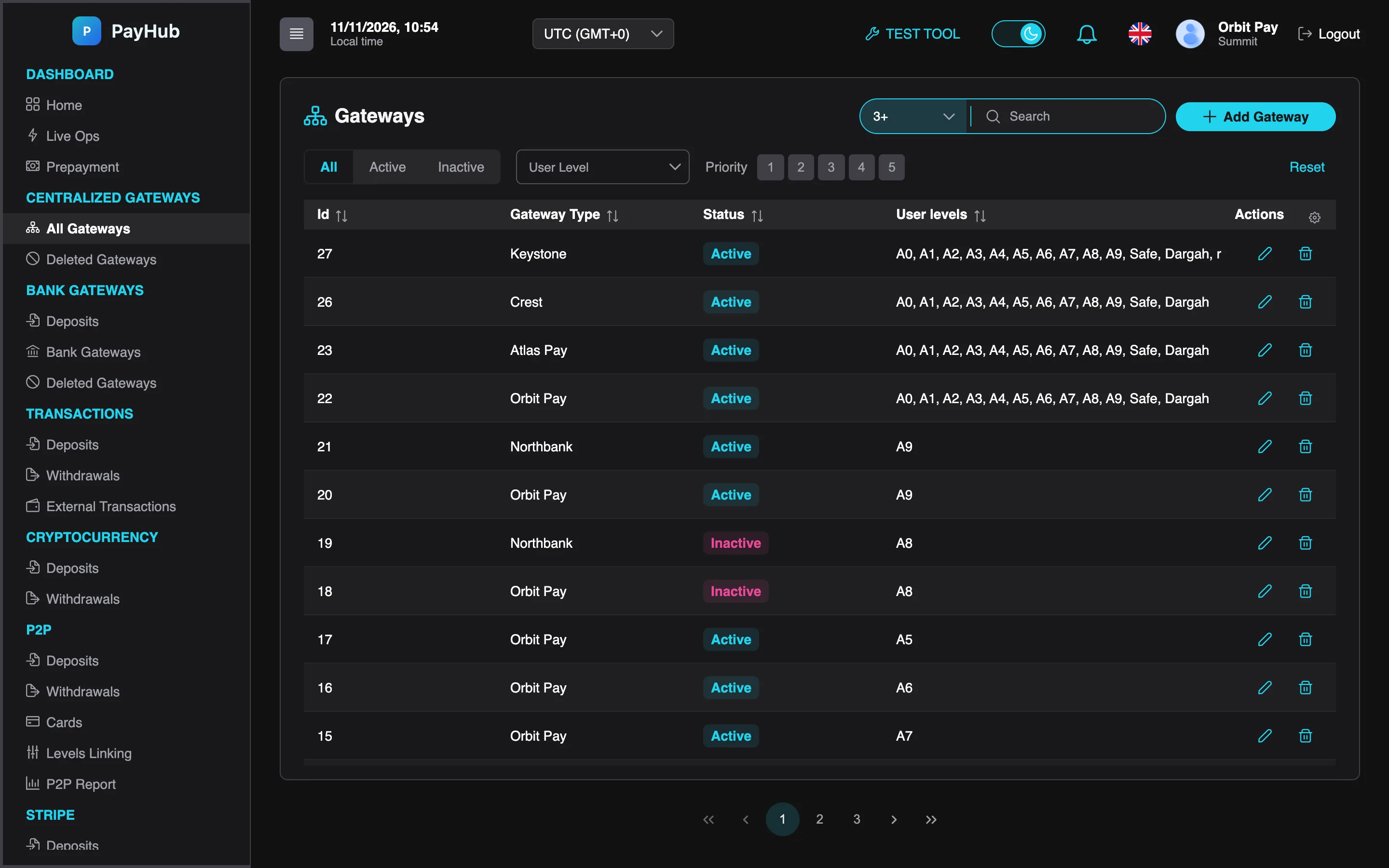
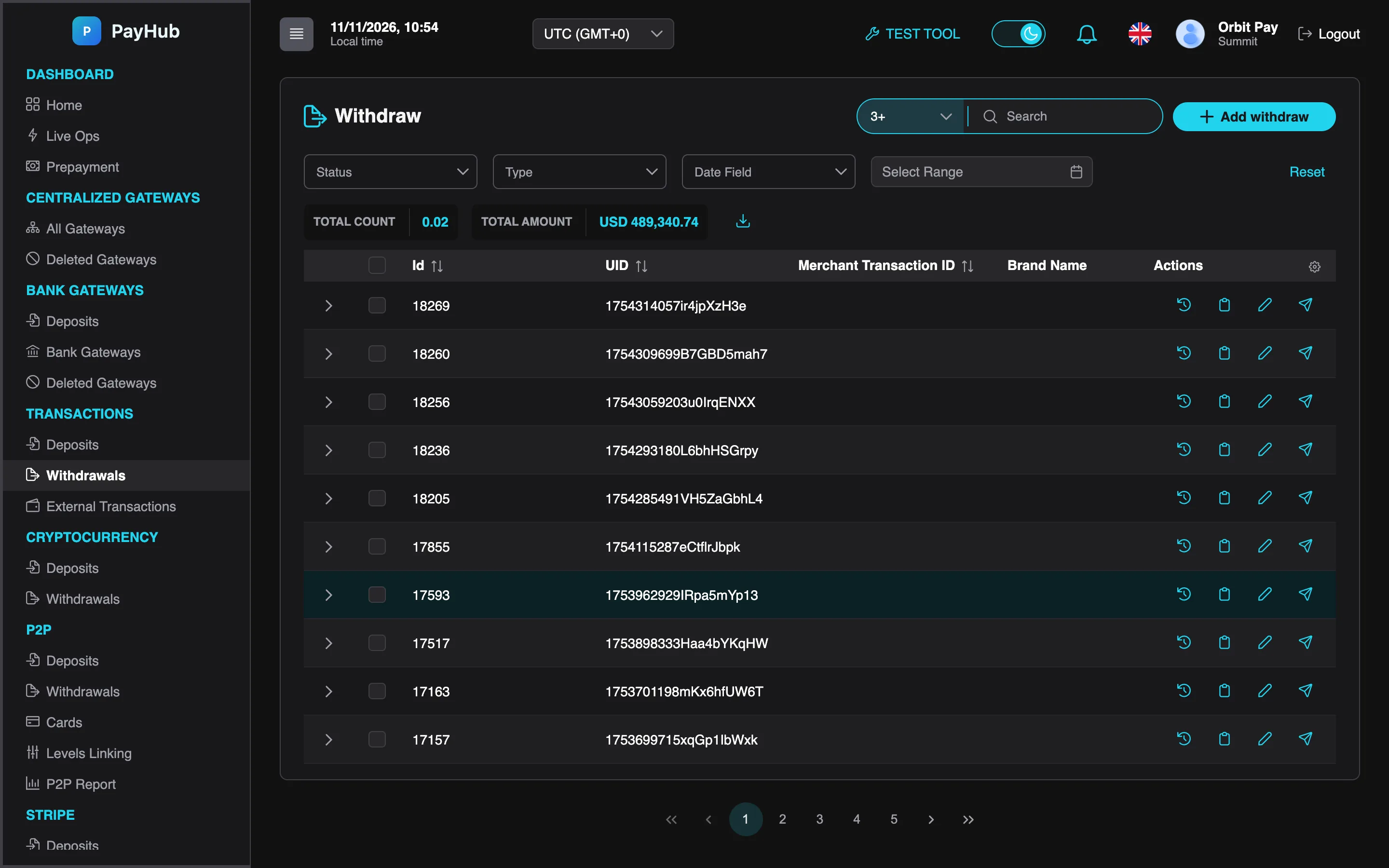
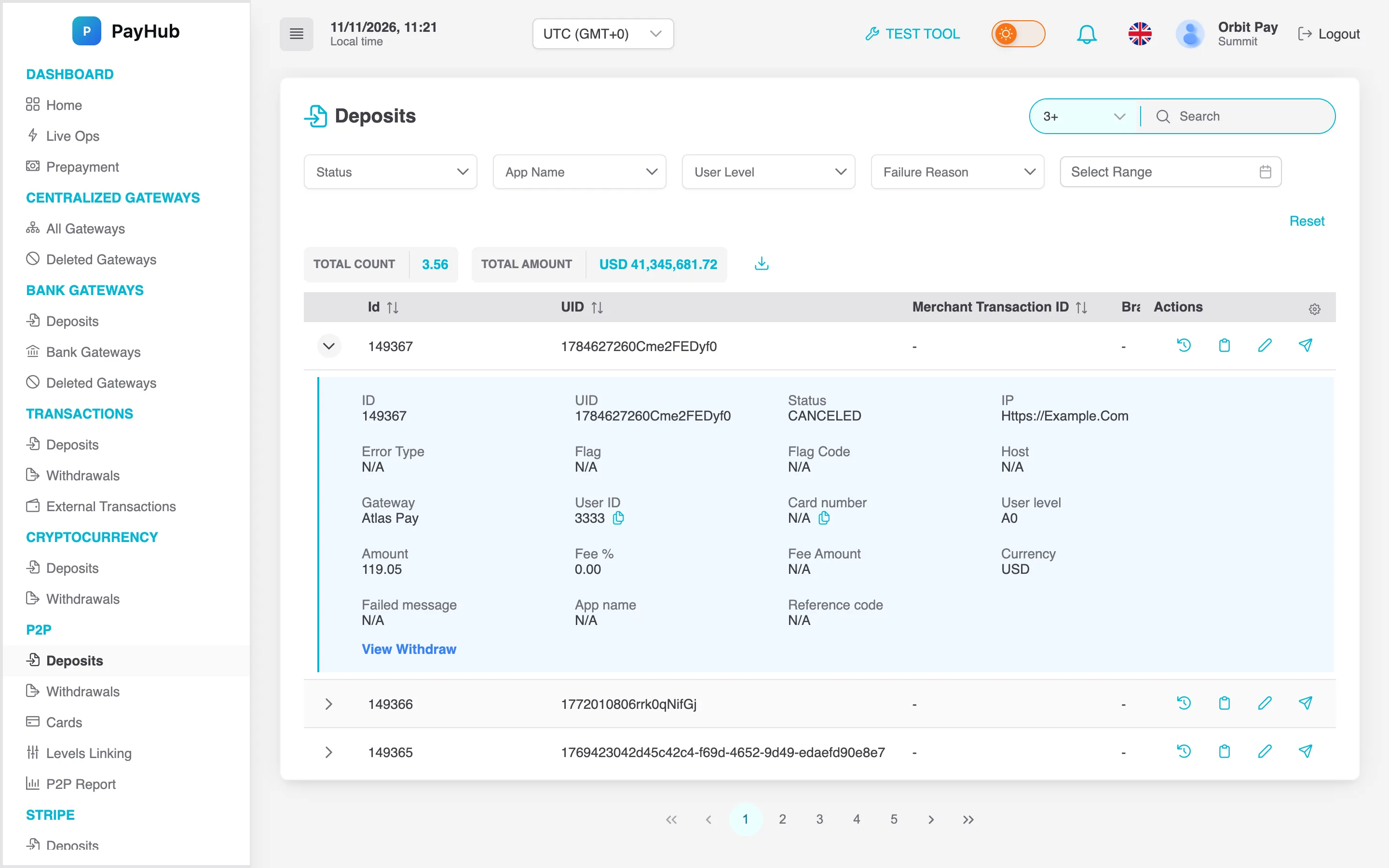
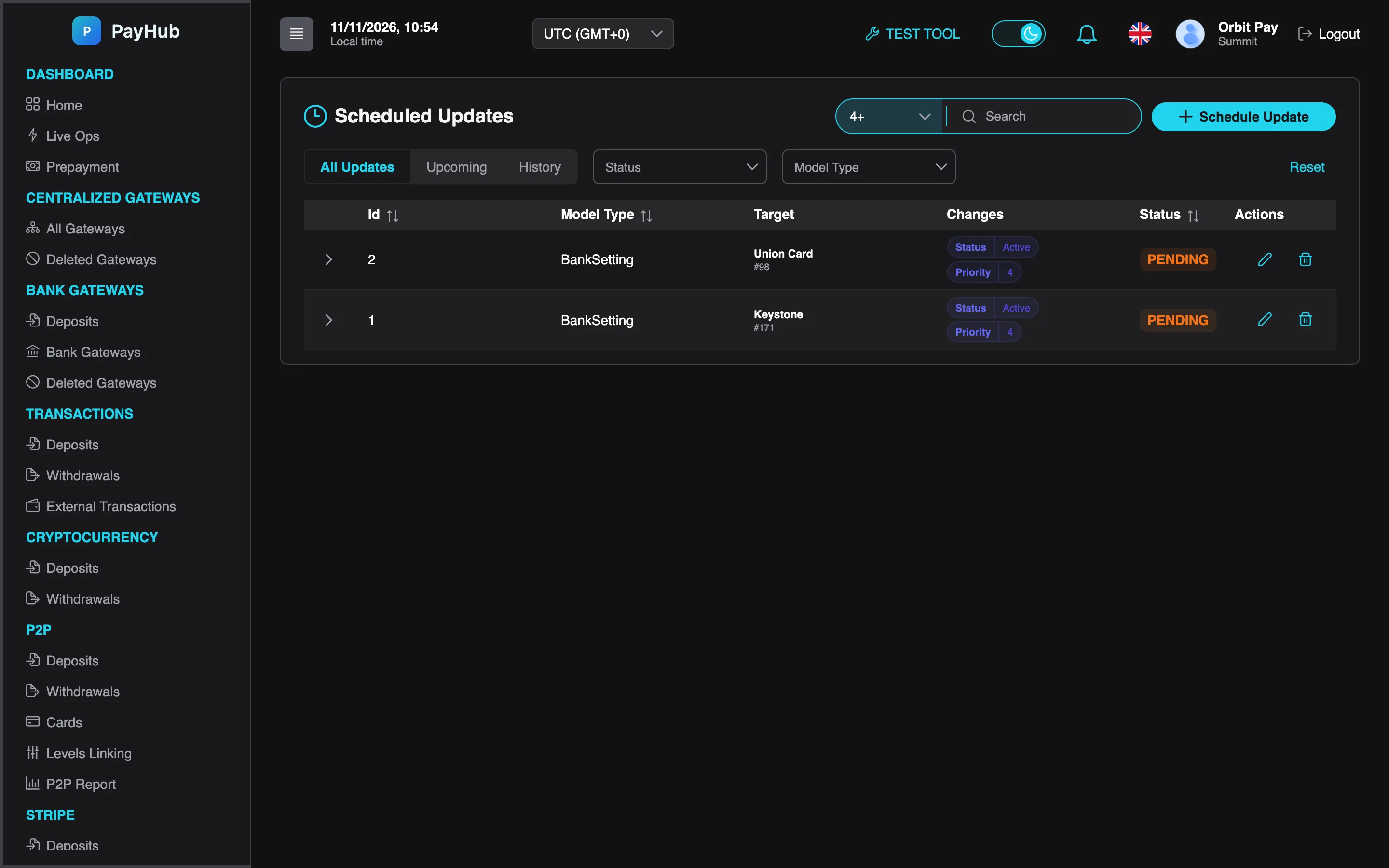
Bank, card, crypto, Stripe, PayPal and Idram deposits and every kind of payout share the same table, filters, timeline and actions — support learns one screen, not ten.
New transactions and gateway errors arrive over WebSockets on a live monitor, so the team sees a failing gateway in seconds instead of from player complaints.
Every section has its own view, create, update and delete permission, and the admin only shows what a role is allowed to do — finance, support and ops each get their own back office.
Statistics by hour, payment type, amount range and user level, a P2P report with success rate and failure reasons, and a 360° report for any customer — the numbers behind every decision.